Taylor Richter · 26 September 2026
Navigating Data Migration Challenges in Modern Note-Taking Ecosystems
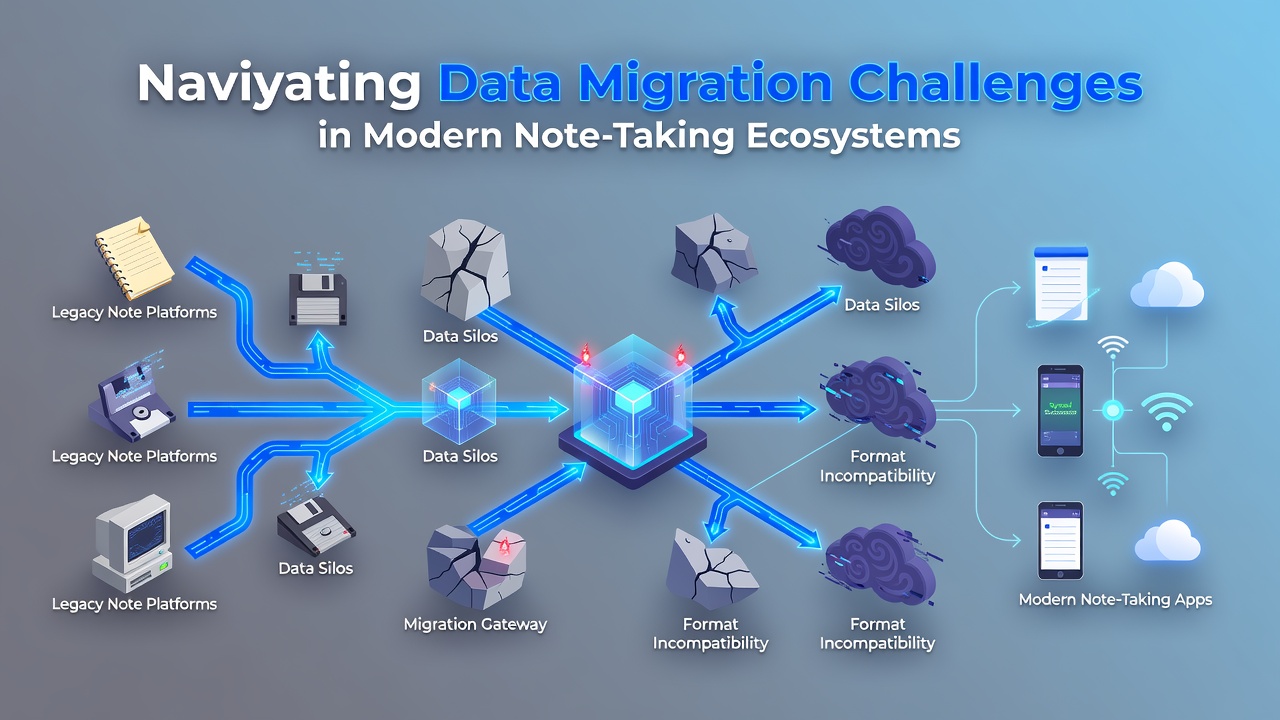
Modern note-taking ecosystems rely on interconnected platforms that store everything from simple text entries to complex multimedia attachments and structured databases, yet shifting content between these systems often exposes gaps in compatibility and preservation standards. Data migration in this space involves converting proprietary structures into formats that other applications can interpret without corruption or loss of context, and researchers have documented recurring patterns where metadata fields disappear or hierarchical outlines flatten into plain lists during the process.
Core Technical Barriers in Format Conversion
Many popular applications maintain closed data schemas that prioritize internal features over interoperability, which means exporting notes frequently produces files stripped of tags, backlinks, and embedded queries. Studies from academic computing departments show that rich text elements such as embedded tables and handwritten annotations require specialized parsers, and without them the output becomes a collection of disconnected blocks rather than a functional replica of the original workspace. Observers note that even when platforms advertise open export options, the resulting Markdown or HTML files often omit timestamps, author attributions, and revision histories that users depend on for audit trails.
Platform updates scheduled for September 2026 are expected to introduce stricter validation rules around attachment handling, forcing migration tools to accommodate new encryption wrappers before files can be read by destination applications. Those who have examined large-scale transfers report that batch processing sometimes triggers rate limits on source APIs, resulting in partial datasets that require manual reconciliation afterward.
Security and Regulatory Dimensions
Transferring sensitive information across borders triggers compliance requirements under frameworks such as the European Union’s data protection regulations and Canada’s Personal Information Protection and Electronic Documents Act, both of which mandate documentation of data flows and consent mechanisms. Industry reports indicate that organizations handling regulated content must implement end-to-end encryption during transit, yet many consumer-grade note-taking services lack built-in support for such protocols when exporting large archives. Canadian privacy guidelines emphasize logging every access point, which adds overhead when users attempt direct imports without intermediary validation steps.
Additional scrutiny arises from encryption key management, because some platforms store notes under user-controlled keys while others rely on provider-managed vaults, and mismatches during migration can render entire collections inaccessible. Research conducted by national standards bodies highlights that audit logs generated during transfer often fail to capture these key exchanges, leaving gaps that complicate post-migration verification.
Practical Approaches Employed by Users and Developers
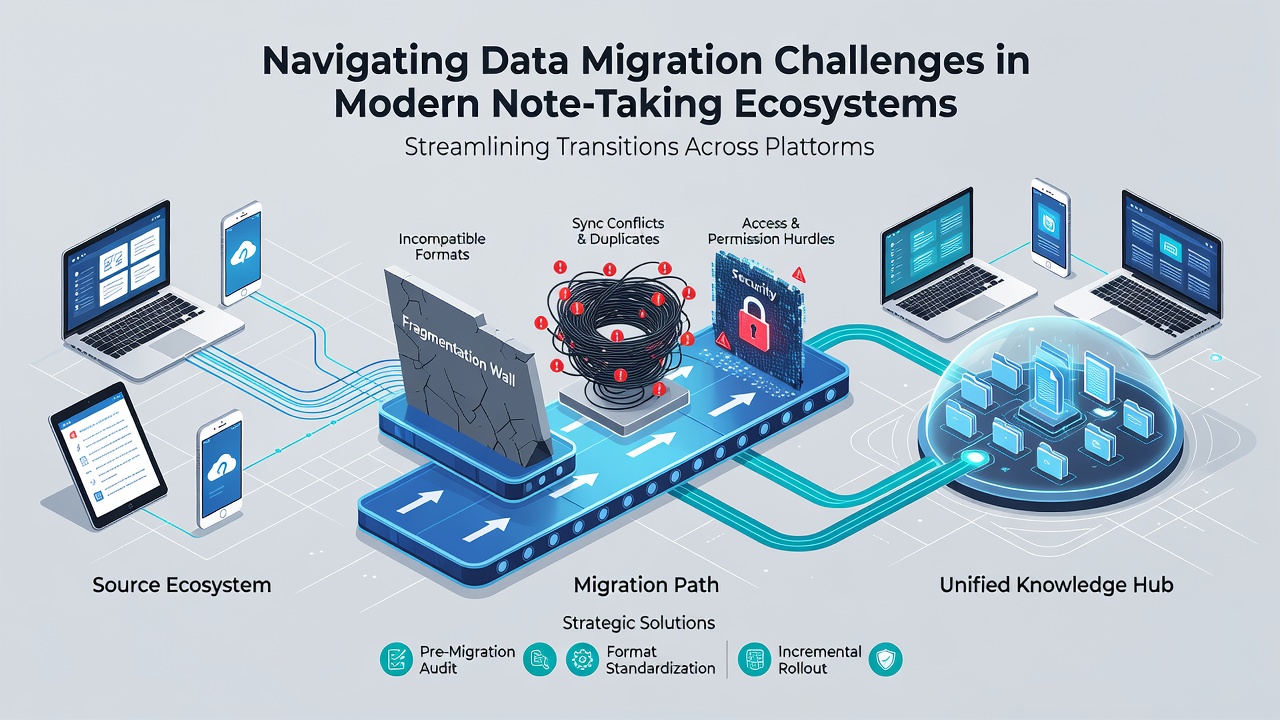
Developers have responded by creating intermediary scripts that map fields from one schema to another before any content moves, and these utilities frequently incorporate checksum verification to confirm that attachments remain intact throughout the pipeline. Users who manage extensive personal knowledge bases often stage migrations in smaller batches rather than attempting full archives at once, which reduces the chance of hitting undocumented API ceilings. Evidence from case examinations reveals that maintaining a parallel copy in an open format such as plain text or JSON provides a fallback when the primary destination encounters parsing errors.
Third-party services specializing in cross-platform synchronization have emerged to handle edge cases like preserved graph relationships and bidirectional link resolution, though adoption remains uneven because these tools require explicit permission scopes that some platforms restrict by default. Data governance frameworks published by the National Institute of Standards and Technology outline recommended validation sequences that include pre-migration audits and post-transfer integrity checks, and organizations following these sequences report fewer instances of orphaned attachments. NIST publications on data portability stress the value of maintaining human-readable logs at every stage so that discrepancies can be traced without relying solely on automated reports.
Emerging Patterns Across Different User Groups
Academic researchers who migrate between laboratory notebooks and collaborative platforms frequently encounter difficulties preserving citation links and figure annotations, prompting the development of custom converters that rebuild these relationships after import. Corporate teams handling project documentation often prioritize retention of access permissions and version histories, which demands coordination between source and destination administrators before any transfer begins. Figures from longitudinal surveys indicate that migrations involving more than ten thousand notes show higher rates of formatting drift unless structured testing protocols are applied at each milestone.
Smaller user communities have documented successful transitions by first normalizing all notes into a common intermediate representation, then applying platform-specific transformations only after that normalization step completes. This staged method allows detection of anomalies such as duplicated unique identifiers or broken internal references before they propagate into the final environment.
Conclusion
Successful navigation of data migration within note-taking ecosystems depends on systematic attention to format mapping, encryption continuity, and regulatory documentation rather than ad-hoc exports. Continued refinement of interoperability standards, combined with adherence to established validation practices from bodies such as NIST and regional privacy authorities, reduces the incidence of data loss while supporting the growing volume of structured information users maintain across multiple applications. As platforms evolve their schemas, the availability of documented procedures and tested intermediary tools becomes central to maintaining continuity of knowledge bases over time.